Skip to the content
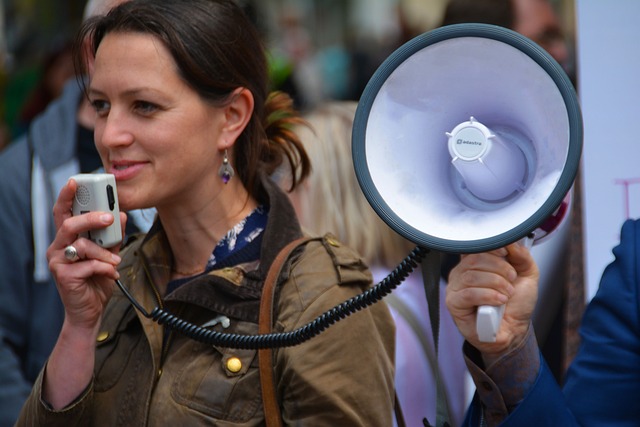
Yes, by helping you control your emotional reactions and your imagination. Also your “body language” which is very important in creating an impression. Also by “defusing” any bad memories which have caused this fear.
Because many people have to speak in public nowadays who didn’t in the past. Group presentations are now a normal part of education in schools, colleges and universities.
In the workplace there are often staff meetings.
Giving presentations and talks is especially common at higher levels in an organisation.
So this fear puts many people off applying for promotion.
For several reasons.
In a large audience there will generally be some people who don’t seem to be listening, others who appear expressionless, others may look puzzled or amused.
The anxious person’s imagination goes into overdrive when they notice these people.
You may assume that the person who isn’t listening is bored or exasperated by your presentation.
Or you could think that the expressionless person is judging you coldly and severely.
You might fear that the puzzled-looking person thinks you’re talking nonsense, or that the smiling person thinks you’re ridiculous.
Presentations often involve pointing at a whiteboard or screen, which draws attention to your hand if it is shaking due to anxiety.
Anxious people tend to speak faster, and therefore breathe faster and less deeply, using only the upper part of the lungs instead of the whole lungs.
They can feel light-headed and unwell, like the start of a panic attack.
Even if you’re fairly good at public speaking it’s best to prepare yourself and rehearse your speech.
This is because it’s difficult to estimate how much time is passing, so you need to ensure that your speech can fit easily into the time allotted without needing to talk faster than what feels comfortable for you.
Generally some bad experience in childhood when the child was made to speak in public but had no preparation or training. Children want to fit in with other children in their group, so it’s very traumatising to be embarrassed in this way. You can read more background information HERE about how phobias develop.
Yes, mmany people who talk or sing in public for a living have experienced fear of public speaking or stage fright, also called performance stress, as discussed in this article. Sad to say, many of them have suffered unnecessarily without getting any help.
Others have resorted to relying on harmful substances, with disastrous consequences.
Therapy sessions are £60 per session, which is about the average going rate in this area.
How many sessions you need varies from person to person, as no two people are the same.
However in my experience it’s normally between three and eight sessions.
Yes, so long as you take up opportunities to speak in public and enjoy being heard, for instance, by having your say in workplace meetings. Public speaking then becomes naturally rewarding in itself, and you will want to go on speaking! This is not like seeing a hairdresser where you keep on going back on a regular basis.
Sometimes if the person needs to speak in public as part of a job, but they don’t actually want to do that job for other reasons. Fear of public speaking is then a good excuse for not doing the job at all. No psychotherapy or hypnotherapy will help if you’re not motivated to make the change.
You can contact me now by calling 01392574669 or use the contact form below.
Remember to tick the “consent” box or the form won’t send.
I see clients in Exeter, at Holmedale Health near Magdalene Road car park.
You can also use the form to contact me with any other questions which have not been answered on this page. You will get a personal reply, not AI-generated and not a sales pitch!